Throughout the year, Midwest Dairy works with retailers across its 10-state region to promote dairy through campaigns featuring promotions, recipes, and messaging that build trust. June is especially meaningful as National Dairy Month highlights the hard work of local dairy farm families – and, in the International Year of the Woman Farmer, the important roles women play in agriculture.
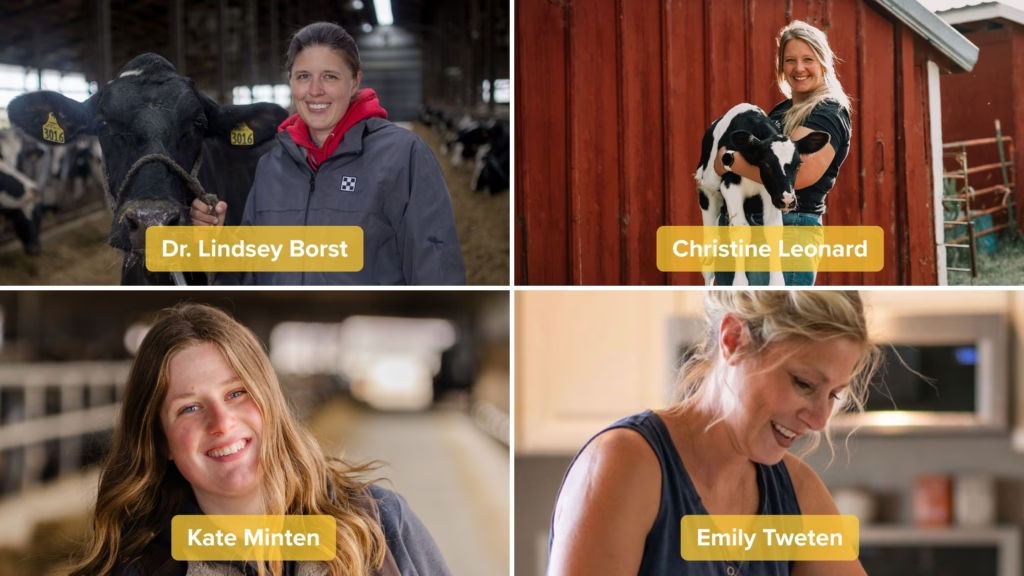
Among these partnerships is Coborn’s, Inc., which operates more than 135 stores across six states. As part of this campaign, Coborn’s is introducing four Minnesota women dairy farmers, Dr. Lindsey Borst (Borst Family Dairy), Christine Leonard (Leonard Family Farm), Kate Minten (Spadgenske Dairy), and Emily Tweten (Valley Acres Dairy),who are sharing their stories, farms, and favorite dairy recipes with Coborn’s shoppers.
Read more about their experiences, their involvement with Coborn’s, and their advice for young women in agriculture.
How did your journey to dairy farming begin?
Lindsey: I always tell people I didn’t grow up on a “real farm”. My first exposure to agriculture and dairy farms was riding with my mom, a veterinarian, on farm calls to treat sick cows and perform pregnancy checks. I also showed dairy heifers in 4-H and FFA, and that is where I met many of my lifelong dairy friends today. I went to college to get my pre-veterinary school education at the University of Minnesota. There, I met my husband, who grew up on a dairy farm and planned to return to it after college as the next generation to run the dairy. Since graduating from veterinary school, I have worked primarily with dairy farmers and am also very involved in the day-to-day operations at Borst Family Dairy.
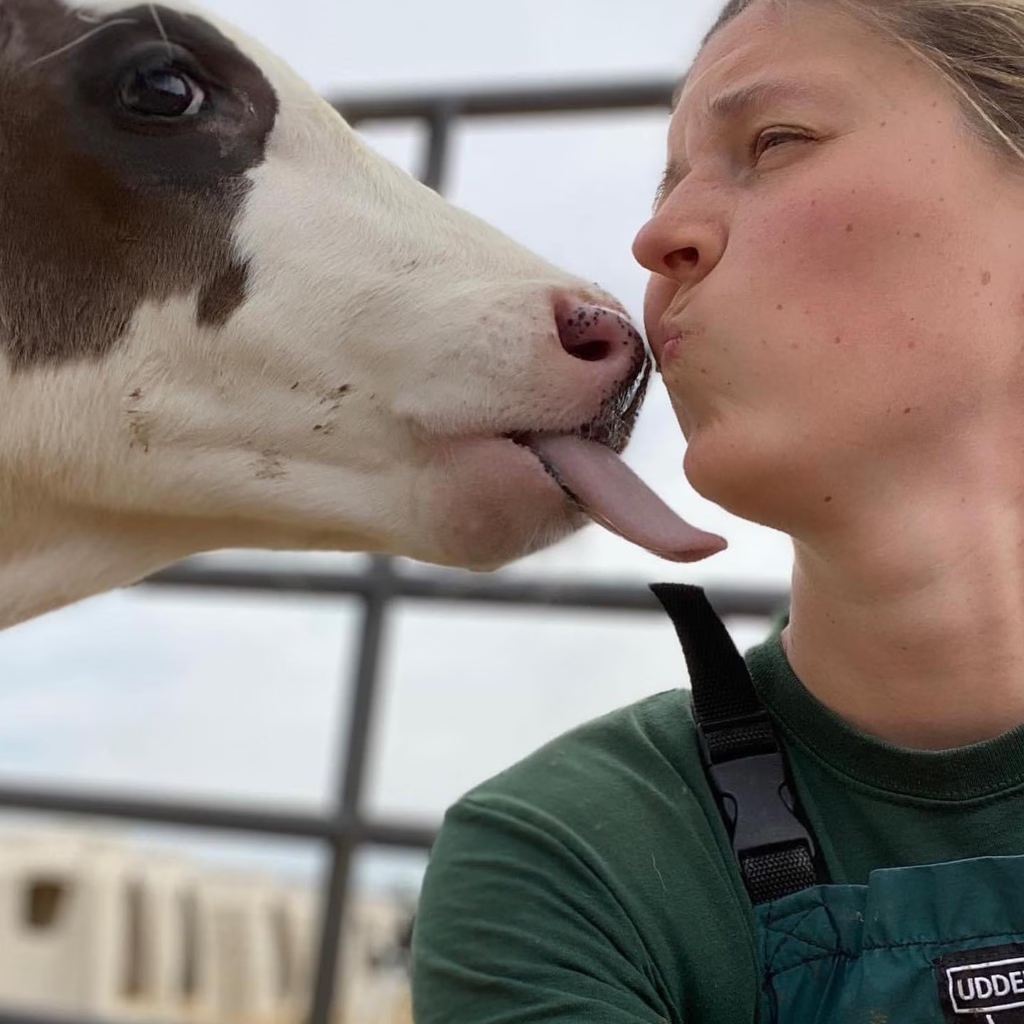
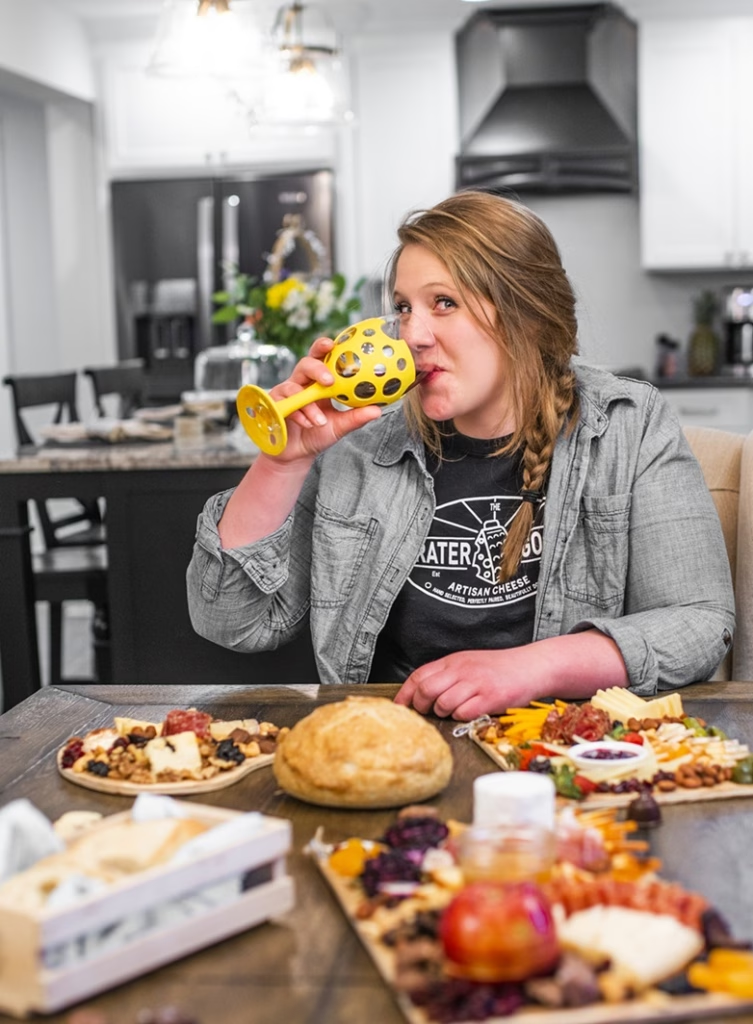
Christine: Growing up as the sixth generation on my family’s dairy farm, I always knew I loved the cows and the farm, but never knew exactly HOW I would be able to come back. For the last three generations, the farm has actually transitioned on the women’s side of the family, and it really never occurred to me that I could actually BE the primary farmer.
About a year before I graduated from the University of Wisconsin-Stout, I got bit by the “farming bug.” My parents said, “No way, go do something else first,” so I spent a year making cheese and milking cows at Redhead Creamery, where I fell in love with artisan cheese.
My parents did let me come home, and I’ve been farming full-time since January of 2018. Since then, I have built an artisan cheese business, The Grater Good LLC, have added a self-service ‘cheese barn’ on the farm, and am in the very early stages of adding the on-farm processing I’ve been dreaming about.
Through all of this, the cows and the farm remain top of mind and my main focus. Everything extra I do is so that I get to keep being “the farmer” that I set out to be from day one.
Kate: My journey in dairy farming began on my family’s farm, where I was born and raised. My dad, Mark, and his twin brother, Mike, started farming together in 1994, and I grew up helping with daily chores and caring for animals from a young age. Over the years, I developed a strong passion for the dairy industry and farm life. After earning my associate degree in Ag Business, I returned to the farm full-time to help raise calves from birth through weaning and assist with other daily farm tasks. Dairy farming has always been more than a job to me; it’s a lifestyle I’ve loved being part of since childhood.
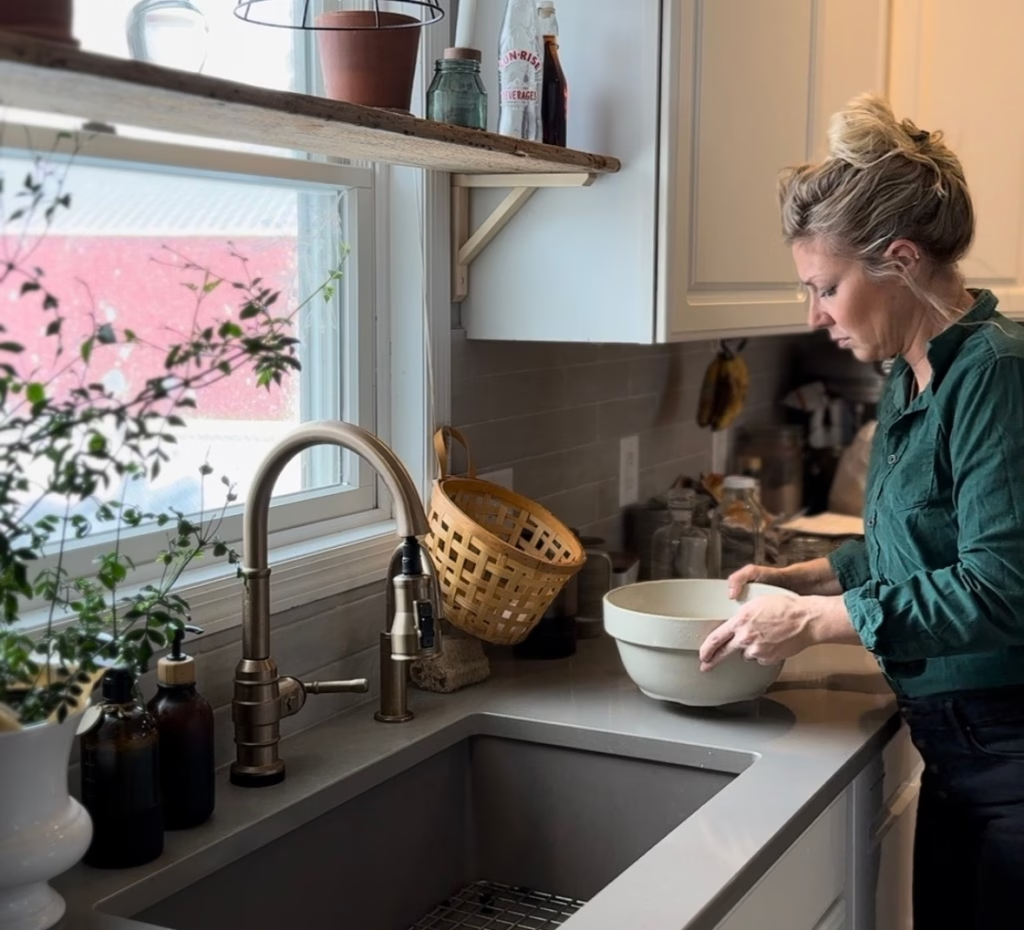
Emily: My parents and I moved onto the farm when I was just one year old, stepping into the big footsteps of my grandparents – a generational farm rooted in family and hard work. I grew up alongside my younger siblings in the everyday work, bottle-feeding calves, scraping barns, and milking cows before the day had fully woken up, catching dusty hay bales in the summers, and not daring to miss out on the teamwork. It didn’t feel remarkable then. It was just what the days asked of us. But somewhere along the way, it took hold – the responsibility, attention to small things, and the understanding that not all growth is visible. It’s a life built much the same way a farm is kept, quietly, patiently, and with care.
What does it mean to you to be a woman farmer in today’s dairy industry?
Christine: I feel incredibly blessed just to get to be a farmer in today’s world overall. There are so few of us who get the opportunity to work with our hands, with our families, and with some of the most incredible animals. To me, women offer diverse perspectives, areas of expertise, and insights that help diversify operations. I am proud to be a part of that.
But the best part of being a woman farmer in today’s industry is getting to walk through the doors that the generations before me opened. Women have always been involved in farming operations. My own great-grandmother was the one who went out and bought the first tractor for our farm when they transitioned from horses to tractors. I am sure she was not the only woman helping to make key business decisions for her family’s operation. Just like she did, I hope my decisions contribute to the future viability of our farm.
Emily: Being a woman farmer in today’s dairy industry means understanding the farm, from the ground level to the bigger picture. I grew up in the daily work of it – caring for the calves, scraping barns, and milking. Today, my role looks different. It’s less about doing every task in the barn and more about carrying the direction of things: making decisions, planning, problem-solving, and keeping the farm moving forward in a way that balances tradition and practicality. It also means stepping into a space built by generations before us while helping shape what it looks like now. It’s not about proving anything; it’s about continuing something well and making sure it stays strong for the next generation coming up.
How important is it to showcase dairy sustainability and nutrition through partnerships like Coborn’s? What value do you believe partnerships like this offer dairy farmers?
Lindsey: Partnerships with companies like Coborn’s are very important in helping us, as farmers, tell our story to a broader audience. Our products are among the most sustainable and nutrition-packed available, and it’s important to use the places where consumers get their food to help get that message out there.
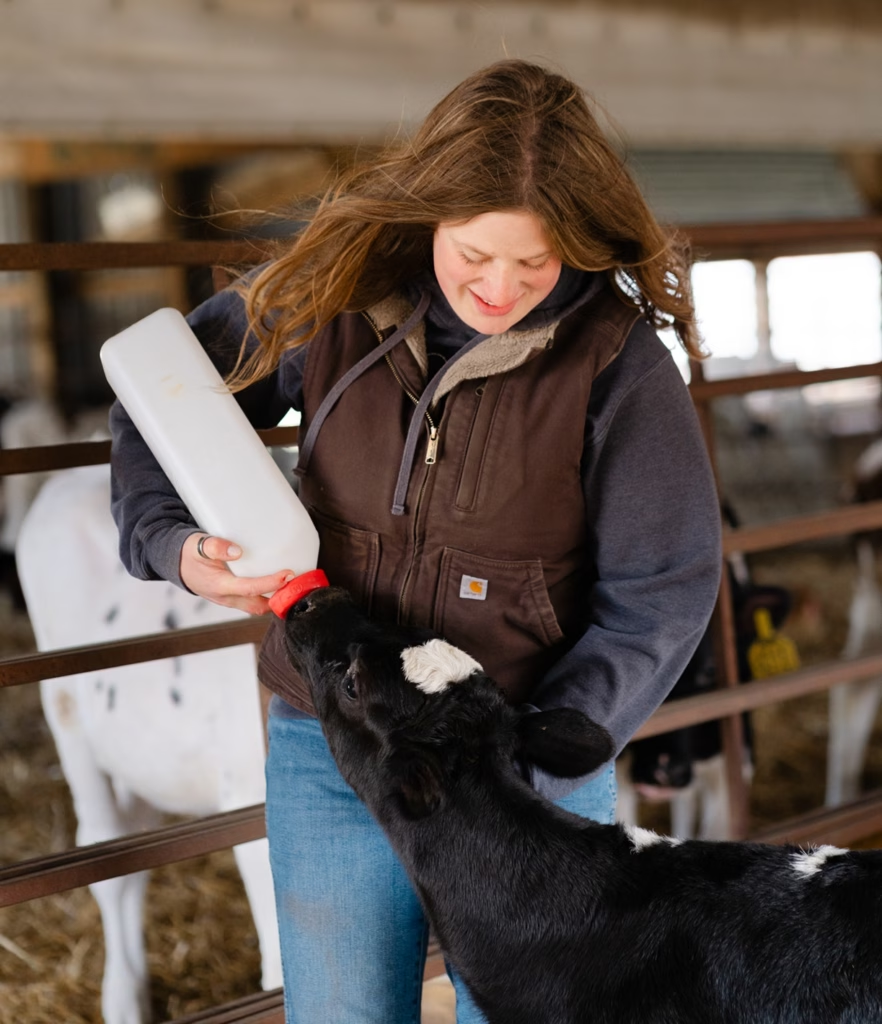
Kate: Partnerships like Coborn’s allow dairy farmers to reach a whole new audience and share our story with consumers. I think one of the most important things we can do as farmers is to continue working to close the gap between farmers and consumers and help people better understand where their food comes from.
Dairy farming isn’t something most people do for the financial reward; we do it because we truly love it. Being able to share our passion for animal care, sustainability, and the production of nutritious dairy products for families is incredibly valuable. Partnerships like this help build trust between farmers and consumers while showcasing the dedication behind the dairy industry every day.
What advice would you give to young women considering a career in dairy or agriculture?
Lindsey: Be willing to be flexible in our ever-changing world and industry. While change is sometimes hard, it can also be exciting and important to help us move forward.
Christine: My advice for young women thinking about a career in agriculture is twofold: 1) try it, and 2) find a mentor. A summer, or even two weeks, getting some hands-on experience will tell you more than reading about it and thinking about it ever will. I’ve helped mentor many young women interested in a career in agriculture since returning home to farm. This mentorship happens in the barn, with the cows, while we’re talking during milking, cleaning, or bedding. I think back to the many, many mentors I’ve had throughout my career and still have today. Women and men who stepped in, took the time to listen, and showed me what they did, why they loved it, and what the most difficult parts were about it. If you need help finding an in, reach out to your local 4-H, FFA, Extension, Midwest Dairy, or other ag groups to help find someone in your area who needs an extra set of hands on the farm.
Kate: My advice to a young woman considering a career in dairy or agriculture would be to believe in the strengths you bring to the farm. There is no doubt that women can do the same work as men, but I also think women bring a different kind of value to agriculture. Don’t be afraid to jump in and work hard, but also don’t overlook the importance of the perspective and care women bring to the industry.
Emily: If I could give advice to young women considering a career in dairy or agriculture, it would be this: don’t wait until you feel like you “belong” before you step in. Farming has never been about having a perfect title or fitting a certain image – it’s about showing up, learning what’s in front of you, and staying willing to grow into the work over time. There are many different ways to be part of agriculture now. It doesn’t always look like standing in the barn every day. Sometimes it looks like management, decision-making, communication, business, or helping shape how a farm moves forward. There’s a space in this industry for women who are willing to step in, stay curious, and build something over time – not all at once, but piece by piece.
Pay attention to what you naturally care about in it – the animals, the land, the systems, the people. That pull usually points you toward where you’re meant to contribute. And don’t underestimate the value of learning by doing. Some of the most important lessons in agriculture come from simply being close enough to it for long enough. Not everything needs to be figured out right away.
Lastly, stay rooted in why you’re interested in it in the first place. Agriculture asks a lot, but it also gives you a deep sense of purpose if you stay connected to it honestly.
What is your favorite dairy food?
Lindsey: Sour cream
Christine: Cheese
Kate: Currently, cream cheese!
Emily: Cottage cheese