Dairy Cow Facts
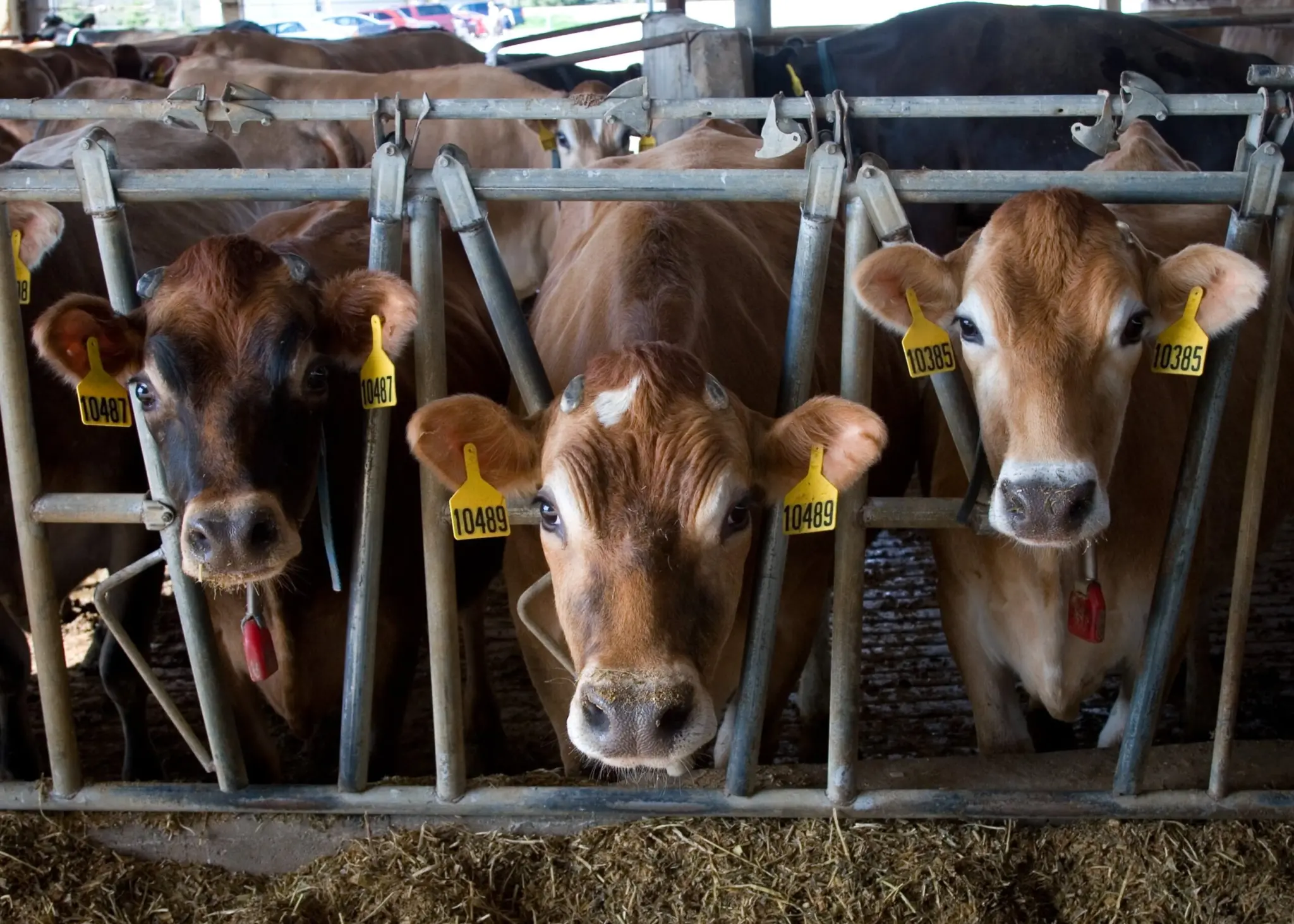
A cow that is producing milk eats about 100 pounds each day of feed, which is a combination of hay, grain, silage, and proteins (such as soybean meal), plus vitamins and minerals. Cows are the ultimate up-cyclers and can eat things humans can’t. This includes silage, hay, and pasture grasses. Cows upcycle food such as soybean meal, beet pulp, and cottonseeds. Farmers employ professional animal nutritionists to develop scientifically formulated, balanced, and nutritious diets for their cows. For more information on cows’ dietary needs, visit this PDF from Agricultural Research Services (ARS).
A common misconception is that cows have 4 stomachs, but the answer is a little more complicated than that. They have 4 separate compartments in 1 stomach, not 4 individual stomachs. These 4 compartments allow them to digest fibrous plants like grass and extract nutrients that humans can’t. These 4 stomach compartments include the rumen, reticulum, omasum, and abomasum. This unique digestive system makes cows the ultimate recyclers. They can convert plants that humans cannot eat into nutritious foods like milk.
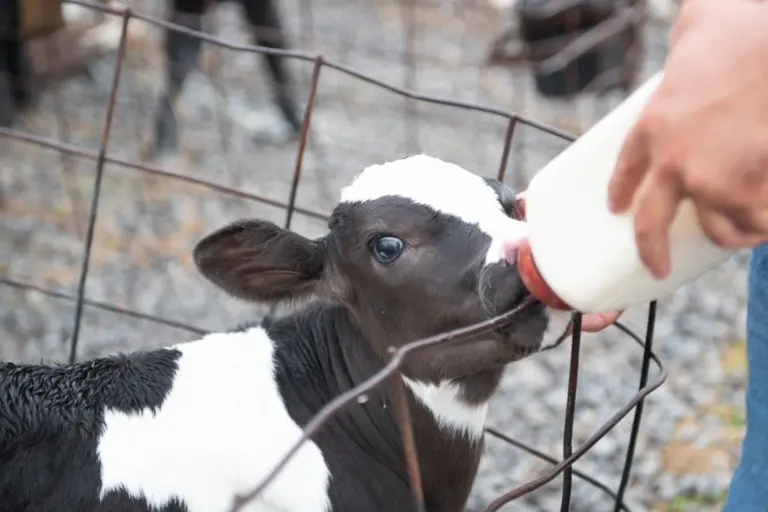
Males are called bulls. Females, before giving birth, are called heifers. After they give birth, female dairy animals are called cows. A calf is a baby cow of either gender.
Dairy cows usually weigh over half a ton, and their average weight varies by breed. The average weight for Ayrshire cattle is 990 to 2,000 pounds. The average weight for Brown Swiss cows is 1,300 to1,400 pounds. The average weight for Guernsey cattle is around 1,000 to 1,500 pounds. The average weight for Holstein cattle is around 1,500 pounds. Jersey cows can range in weight from 770 to 1,500 pounds. Milking Shorthorn cows typically weigh between 1,400 and 1,500 pounds. The average Red & White dairy cattle weigh around 1,400 pounds.
Dairy cow weights can also vary by age. A newborn calf can weigh anywhere between 60 to 100 pounds. By 1 month of age, the average calf weighs 90 to 150 pounds.
Dairy cows that produce milk need a higher amount of water per day than other types of cows. When a dairy cow is producing milk, it can consume anywhere between 30 and 50 gallons of water each day. That is the equivalent of a full bathtub of water!
The amount of manure produced can depend on the weight, diet, and breed of dairy cow. However, the average amount of manure produced by a dairy cow is around 82 pounds of manure per day per 1,000 pounds each cow weighs. For the average cow, which weighs around 1,400 pounds, this comes out to roughly 115 pounds of manure each day.
Cows rest for between 12 to14 hours per day. However, this is broken up into shorter naps throughout the day that last for 4 hours on average. Cows can doze off while standing, but they must lie down to reach deep REM sleep.
Most cows will eat 100 pounds of the total mixed ration (TMR) every day. Total mixed ration (TMR) is a mix of forage, grains, vitamins, and minerals. The amount of dry feed typically amounts to between 3% and 4% of their total body weight, and cows spend around 6 hours each day eating.
Dairy cows can typically live up to around 15 to 20 years.
The female calves of dairy cows may be raised to produce milk. Male calves are sold for beef production.
Depending on the breed of the dairy cow, dairy calves weigh 60 to 100 pounds at birth. An Ayrshire calf weighs 65 to 75 pounds. A Brown Swiss calf weighs between 90 and 100 pounds. A Guernsey calf weighs 65 to 75 pounds. Holsteins and Red & White calves are generally larger and weigh between 85 and 100 pounds. A Jersey calf weighs 50 to 65 pounds. A milking shorthorn calf weighs 70 to 85 pounds at birth.
Milking
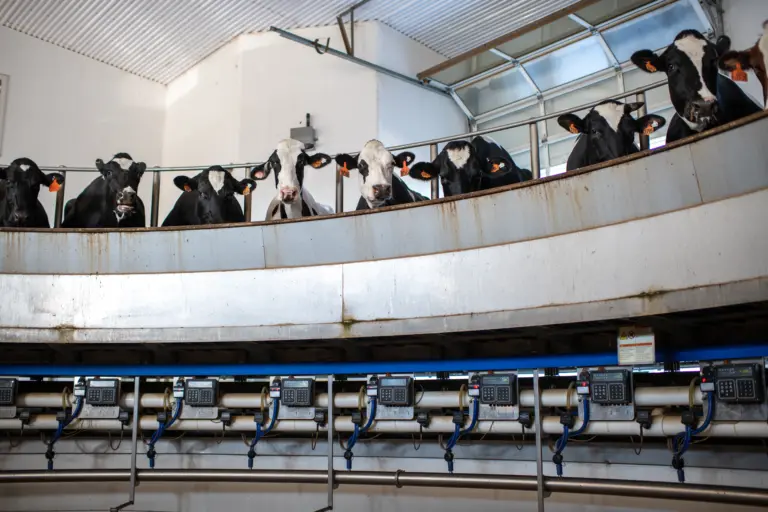
Dairy cows love routine and are most comfortable with consistency. Cows like to stay together and often follow the leader of their group. If one cow goes somewhere, the others usually go too. Also, dairy cows enjoy being milked because it feels good and relaxing to them. This makes it easy for them to remember to go to the same place every day.
Most dairy cows are milked 2 to 3 times per day. On average, a cow will produce 6 to 8 gallons of milk each day. This is the equivalent of 100 glasses of milk. However, milk production varies slightly depending on breed. Holsteins produce the largest quantity of milk compared to other dairy cows and can produce up to 9 gallons of milk each day.
Early lactation cows are cows that are within the first 100 days of lactation. These cows produce less milk overall than late lactation cows. Milk production for a cow in the early lactation phase is about 3 to 6 gallons of milk per day. Late lactation cows are in about the last month of milk production, and milk production is about 25% of what it was during peak lactation.
The exact amount of dairy produced by a dairy farm varies greatly depending on the number of cows on that farm. However, the average dairy cow can produce between six to seven gallons of milk each day.
All cows produce milk once they deliver a calf. About 12 to 14 months after the birth of her previous calf, a cow will calve again, thus providing milk.
A cow’s period of lactation after giving birth is usually around 9 to 11 months. This can vary slightly depending on several factors such as age, diet, and breed.
Dairy cows can be milked anywhere from 2 to 3 times daily. Additionally, recently calved cows might be milked up to four times a day during the lactation period to ensure long-term management of high milk production and udder health.
Cows can drink between 30 and 50 gallons of water per day if they are actively producing milk. Another 7 gallons of water per cow (on average) is used for cleaning. This means dairy farms use around 37 to 57 gallons of water per cow daily.
By following a diet of large amounts of grass and hay, cows get the nutrients they need to make milk. These nutrients are processed in the cow’s udder, which is a specialized organ containing milk-making cells. Once the milk is created, it travels through tubes to the teats. The teats serve as a way for farmers to gently collect the milk.
Cows must give birth to a calf to begin the milk-making process. During pregnancy, special hormones prepare the cow’s body to create milk, intended to help their calves grow big and strong. After a calf is born, the cow produces milk for about ten months, and farmers milk them every day to keep that supply going.
Did you know milk is super local? Most people live within 100 miles of a dairy farm, and fluid milk typically travels from the farm to your local store in as little as 48 hours.
Dairy Cow Care
Dairy farmers take great care of their animals by providing a nutritious diet, good medical care, and healthy living conditions. Dairy farmers work closely with veterinarians, animal nutritionists and other professionals to keep their cows healthy and comfortable. Dairy farmers’ commitment to ensuring high-quality milk begins with taking good care of their cows and treating them with respect.
Yes! Dairy farmers are dedicated to producing high-quality milk, and that begins with taking good care of their cows. Dairy farmers work closely with veterinarians and professional animal nutritionists to keep their cows healthy and well-nourished. Nutritious diets, healthy living conditions, and good veterinary care are all essential when it comes to producing safe, wholesome, nutritious milk.
Cows are only treated with antibiotics when necessary. When illness requires that a cow be treated, antibiotics are administered according to strict FDA guidelines, which include withholding milk from sale. When a cow’s milk is withheld, she is given special care and attention separate from the rest of the milking herd until her milk tests free of antibiotics.
Many factors affect the type of environment available to dairy cows. Access to pasture is determined mainly by geography, availability of land suitable for grazing, and weather conditions. In all cases, the well-being, protection, and comfort of their cows are dairy farmers’ top priorities. Many of today’s dairy farms use free-stall housing, a type of barn that allows cows the freedom to move around at will and eat and sleep whenever and wherever they choose. In this type of barn, feed for the animals is available in a feed alley (a clean, impervious surface), which cows can access 24 hours a day. In addition, the barns are designed to provide sunshine and fresh air.
Cows housed indoors may sleep on sand beds or mattresses made of rubber, foam or a combination of materials. Most dairy barns also use advanced ventilation systems to ensure air quality. On warm days, farmers use fans and misters to keep cows cool and comfortable.