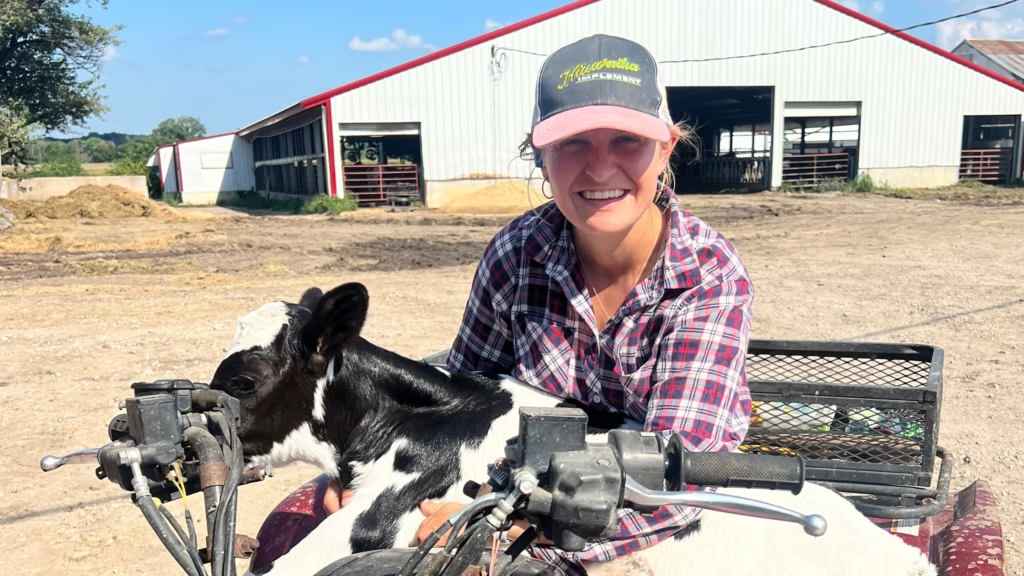
As part of the International Year of the Woman Farmer, Midwest Dairy is highlighting the women who help shape and strengthen today’s dairy industry. For Stacy Rethman of Rottinghaus Holstein Farm in Seneca, Kansas, dairy farming has been a lifelong journey, rooted in childhood memories and a family tradition that still inspires her work today. From caring for cows and balancing farm and family life to sharing her dairy story with consumers, Stacy reflects on the lessons farming has taught her, the opportunities for women in agriculture, and why every dairy farmer has a story worth sharing.
How did your journey in dairy farming begin?
I’ve always had a background in dairy farming because I was born and raised on a dairy farm. I remember running bottles out of the house for baby calves when Mom mixed milk replacer in her kitchen sink. I also remember helping Dad in the milking parlor when I was too short to reach the cows. Dad gave me my first official paying job when I was in high school, and although I pursued other jobs, I never fully left the farm. I came back and helped with silage harvest throughout college, and as a teacher, I worked on the weekends feeding calves. It was ultimately working full-time with family that brought me back to the dairy. I came back to the farm when my grandpa was cutting back, and my main role was feeding the cows with the tractor and feed wagon. Now, I do a little bit of everything to try to take the best care of our cows that I can.
What does it mean to you to be a woman farmer in today’s dairy industry?
I think it’s a great time to be a woman in the dairy industry because there are so many different roles we can fill. My parents have always expected me to handle the same things as a man, so I have always had the confidence to find my role on the farm and in the industry. It can be challenging to balance family and farm life. To be present in both roles can be exhausting, but it can also be so rewarding. Watching the kids grow up on the farm, learning about life, and seeing a calf grow into a great-producing cow always gives me a feeling of satisfaction and joy.
How do you balance farm responsibilities with family, leadership roles, or community involvement?
Like I said, it’s a challenge! There are so many times it is easy to get too caught up in farm responsibilities, and often when I’m not at the farm, I feel guilty for not being there. However, we have great employees I can depend on, so I can try to keep a regular schedule between farm and home life. It helps farming with family so we can take turns picking up each other’s slack when we need to.
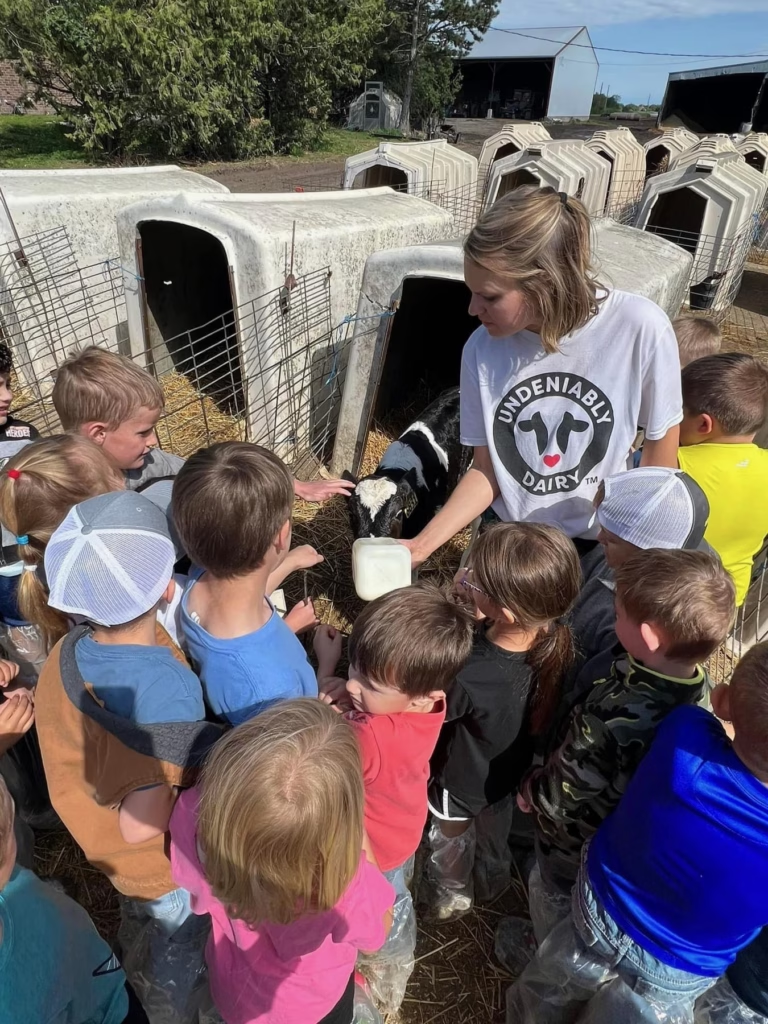
What do you love most about dairy farming?
The part I love most about dairy farming is the calm, quiet mornings. Being the first one in the barn to greet the cows before the sun is even up. It’s peaceful and a great start to the day before things get busy or something could go wrong.
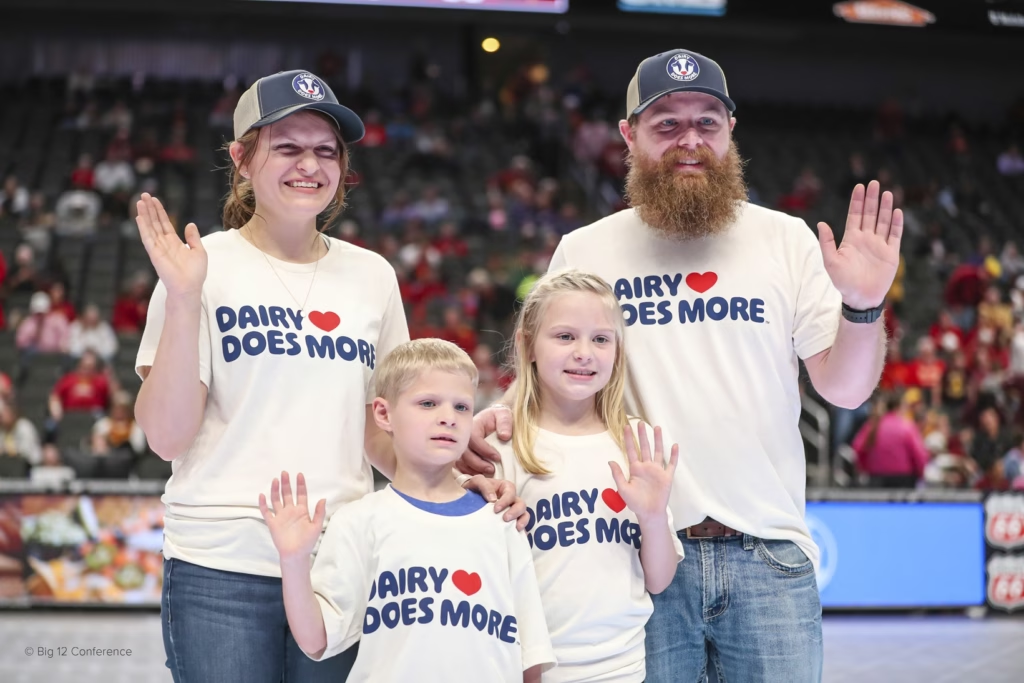
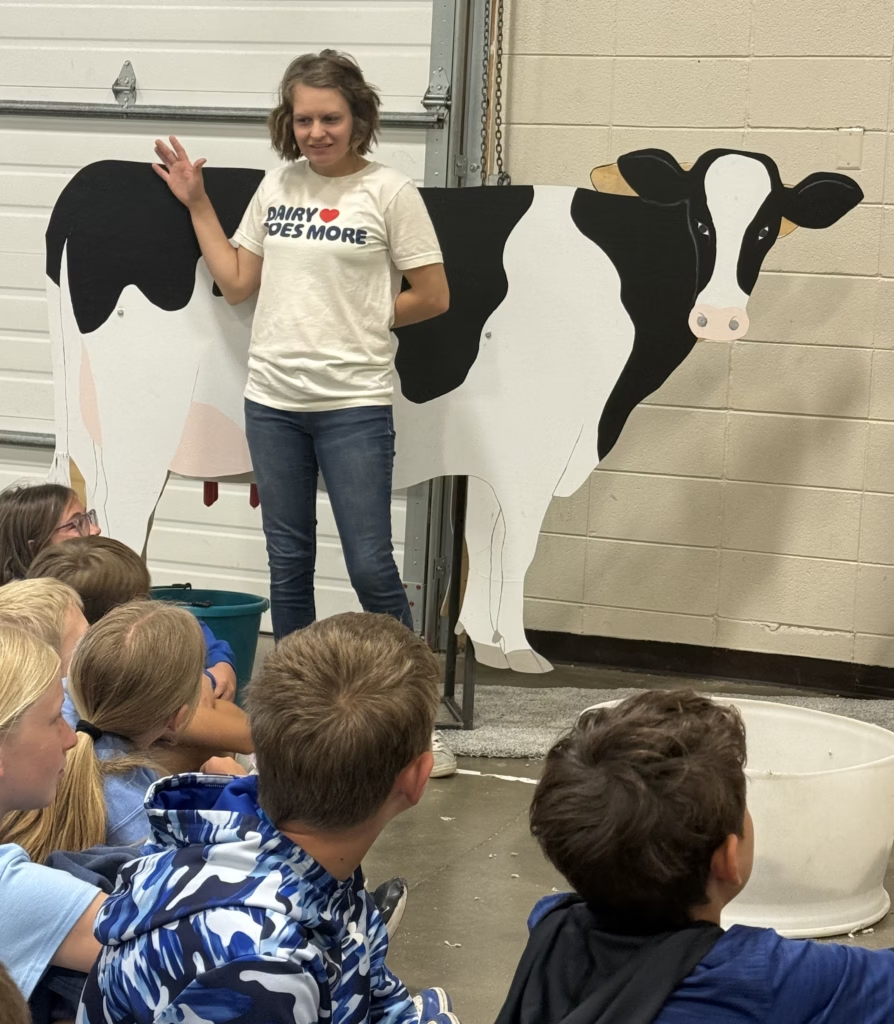
What drives you to share your dairy story with consumers on social media, and why do you think that outreach and sharing is important?
I share my story and educate others about dairy because if we (dairy farmers) don’t share it, someone else will, and it probably won’t be told the way we want. That’s why I like to make sure I’m keeping up with what’s going on in the industry and what kinds of products our milk is being turned into. A friend recently said ultra-high temperature milk wasn’t “real” milk, and when I asked why, she said someone had come after her on social media, saying it couldn’t be real if it was shelf-stable that long. I compared it to heating food in a jar when canning. No one says canned vegetables aren’t “real vegetables” because they are shelf-stable. Sometimes it can seem silly what some people come up with, so it’s important to know how to approach them and educate in a nonconfrontational manner, and you don’t have to be big on social media to do so! People need to know where their food comes from, and it’s up to us to build that trust.
What’s a lesson farming has taught you that you carry into other areas of life?
Never give up. There is always a way; you just need to find it. Sometimes that means taking a break for a while and coming back to it later so you can look at it from a different angle. Don’t try to force something together or make it work; just take a step back and reanalyze the situation to find that solution. And if something came apart, it can always go back together.
What advice would you give to young women considering a career in dairy or agriculture?
My advice to other women considering careers in dairy or agriculture is to not let someone else’s preconceived notions hold you back. I am lucky to have parents who never saw farming as a man’s job – or maybe unlucky because I was expected to do the same amount as everyone else! But I know that’s still the perception for some these days. Women are just as capable, and even more capable in some areas. It’s important to find your niche in the industry, what you are good at, and do it to your fullest potential.
Favorite dairy product?
Cheese, because it makes everything taste better. Plus, there are so many kinds!